Optimize Your Brand For Search Engines, LLMs and Users Trust. We transform your website into a semantic SEO ecosystem that aligns with Google, Bing, and AI platforms like ChatGPT, Perplexity & Gemini.

At Just Semantic SEO, we bring years of expertise to the table, leveraging cutting-edge semantic SEO strategies that drive measurable results. Our ability to stay ahead of search engine algorithm updates and implement advanced techniques ensures that our clients consistently achieve top-tier rankings and increased organic visibility. We’ve helped hundreds of businesses unlock their full potential online by aligning content with user intent and search engine algorithms.
Comprehensive topical clustering establishing complete domain coverage and topical depth.
Wikidata, Google Knowledge Graph & Schema.org entity reconciliation for true machine understanding.
NLP-engineered briefs with heading structures, entity relationships, and user intent alignment.
Optimized for generative AI citations in Google SGE, Perplexity, ChatGPT and Copilot answer engines.
We are not just another SEO agency, we specialize solely in Semantic SEO, helping brands go beyond keywords to establish topical authority. With over 100+ topical maps, 5000+ semantic briefs, and comprehensive EEAT-driven strategies delivered across industries like SaaS, Law, E-Commerce, and Healthcare, we build enduring search moats.
Comprehensive semantic SEO solutions designed to build lasting topical authority and meaningful visibility.
Build a comprehensive topical map that establishes your site as the definitive authority in your niche.
Define intent-driven outlines, and optimize every piece to serve both context and conversion.
Entity-rich, intent-aligned content that serves both users and search engines perfectly.
Scale your content with AI-powered workflows, prompt engineering, and automated schema generation while maintaining human editorial quality.
Comprehensive technical analysis and optimization to ensure your site foundation is search-engine perfect.
Dominate local search with Google Business Profile optimization, local schema implementation, and geo-targeted strategies.
Choose the semantic SEO tier tailored to your domain's scale, competitive landscape, and organic growth objectives.
Ideal for small sites and early-stage startups entering a defined niche.
Designed for scaling SaaS, B2B companies, and high-growth eCommerce brands.
Comprehensive topical authority retainers for enterprise and multi-brand platforms.
A proven 5-step framework to build real topical authority and lasting search visibility.
Identify the real entities that define your niche. We map out the semantic landscape of your industry to understand what matters most to search engines, AI platforms, and your target audience.
Build a structured hierarchy that mirrors how search engines interpret relevance. Every cluster serves a purpose in your authority ecosystem, covering all search intent layers comprehensively.
Design meaningful, entity-rich outlines for optimized publishing. Each brief defines intent, entities, NLP targets, and semantic structure for maximum impact and search visibility.
Add structured data to reinforce context and relationships. We implement precise JSON-LD schema that helps search engines understand your content, entities, and authority signals correctly.
Scale topical authority and refine based on performance signals. We continuously monitor, analyze, and optimize your semantic footprint to maintain competitive advantage and compound growth over time.
We are not just another SEO agency, we specialize solely in Semantic SEO, helping brands go beyond keywords to establish topical authority. With over 100+ topical maps, 5000+ semantic briefs, and comprehensive EEAT-driven strategies delivered across industries like SaaS, Law, E-Commerce, and Healthcare, our entity-first approach sets us apart. We blend advanced SEO frameworks with practical execution to drive measurable ROI.
Partnering with us means more than just rankings; it means building a sustainable content ecosystem, enhanced visibility, and long-term growth in today’s AI-driven search landscape.
We map your entire industry's knowledge graph before targeting a single search query, ensuring complete contextual coverage.
Engineered for generative AI answer engines including ChatGPT, Perplexity, Claude, and Google AI Overviews.
Every brief, map, and schema markup is tied to quantifiable search visibility, organic traffic, and business ROI.
Implement proven frameworks that demonstrate definitive subject-matter expertise directly to Google's ranking algorithms.
Our proprietary methodology unites semantic linguistics, computational knowledge graphs, and modern search engineering.
Defining and interlinking authoritative Wikidata, Schema.org, and Google Knowledge Graph entities across your entire domain.
Structuring content outlines that satisfy natural language processing algorithms while delivering proprietary, original data points.
Categorizing informational, commercial, transactional, and navigational intent vectors to eliminate internal cannibalization.
Optimizing semantic sentence structures and clear factual definitions to ensure citations in AI-generated summaries.
Our entity architecture, topical maps, and search engineering frameworks are acknowledged by global authority platforms.

We are a specialized Semantic SEO agency dedicated to helping brands dominate search through entity-driven SEO strategies, topical maps, and EEAT-focused content systems. Just Semantic was founded in 2022 by Hanzala Khan as a product of his passion for SEO and his drive to lead in authority, entities, and expertise. We also integrate GEO optimization, AEO (Answer Engine Optimization), and LLM-focused optimization to ensure content is structured, discoverable, and aligned with modern search and AI systems.

Hanzala Khan is a Semantic SEO Specialist and the Founder of JustSemanticSEO. With over 5 years of experience in SEO, he has evolved from mastering technical, on-page, and off-page optimization to specializing in Semantic SEO.
He implements Koray Tuğberk GÜBÜR's Framework of Topical Authority to create entity-based ecosystems that align with Google's understanding of meaning and intent.
He structures topical maps, crafts semantic content briefs, and builds information architectures that connect context with user intent — ensuring every piece of content serves a clear purpose and contributes to a meaningful search ecosystem.
Trained directly in the world’s most advanced holistic search framework. We engineer algorithmic authority based on the mathematical principles of semantic information retrieval.
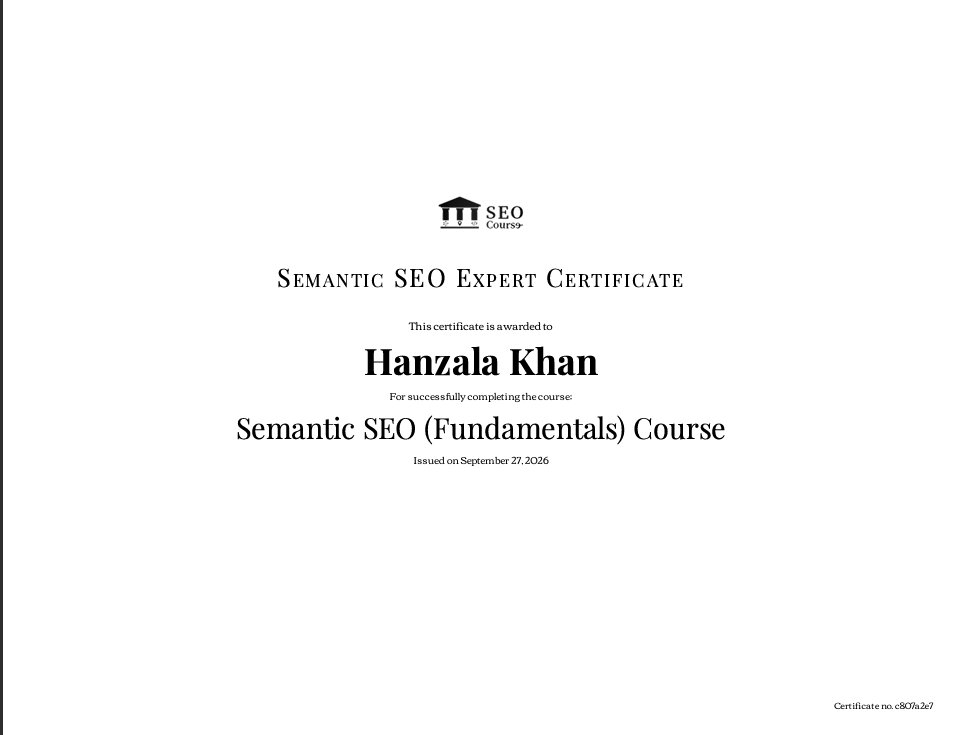
Koray Tuğberk GÜBÜR is the celebrated creator of the Topical Authority framework and founder of Holistic SEO & Digital. This official certification validates advanced expertise in knowledge graph engineering, entity networks, and lexical-semantic search alignment.
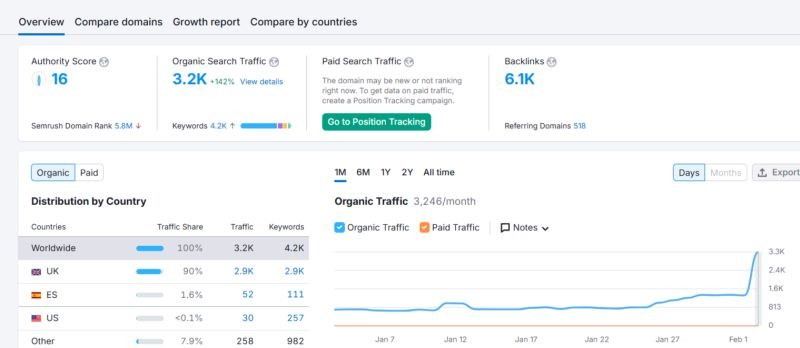
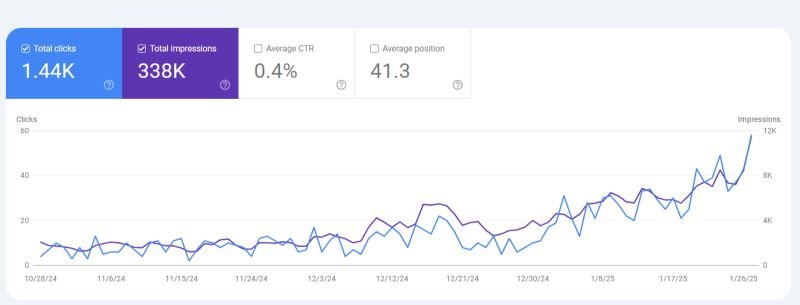
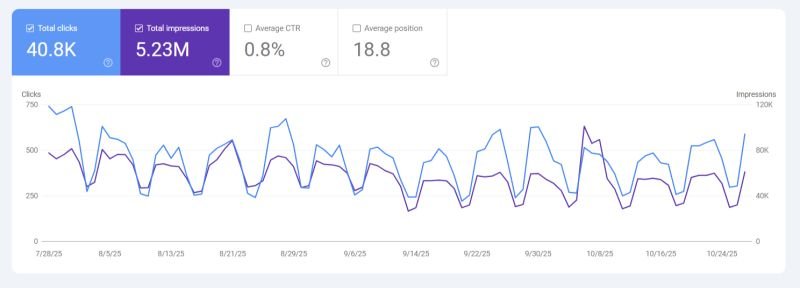
Real SEO results. Real business growth. Verified Google Search Console performance data showing how semantic entity optimization scales long-term organic authority.
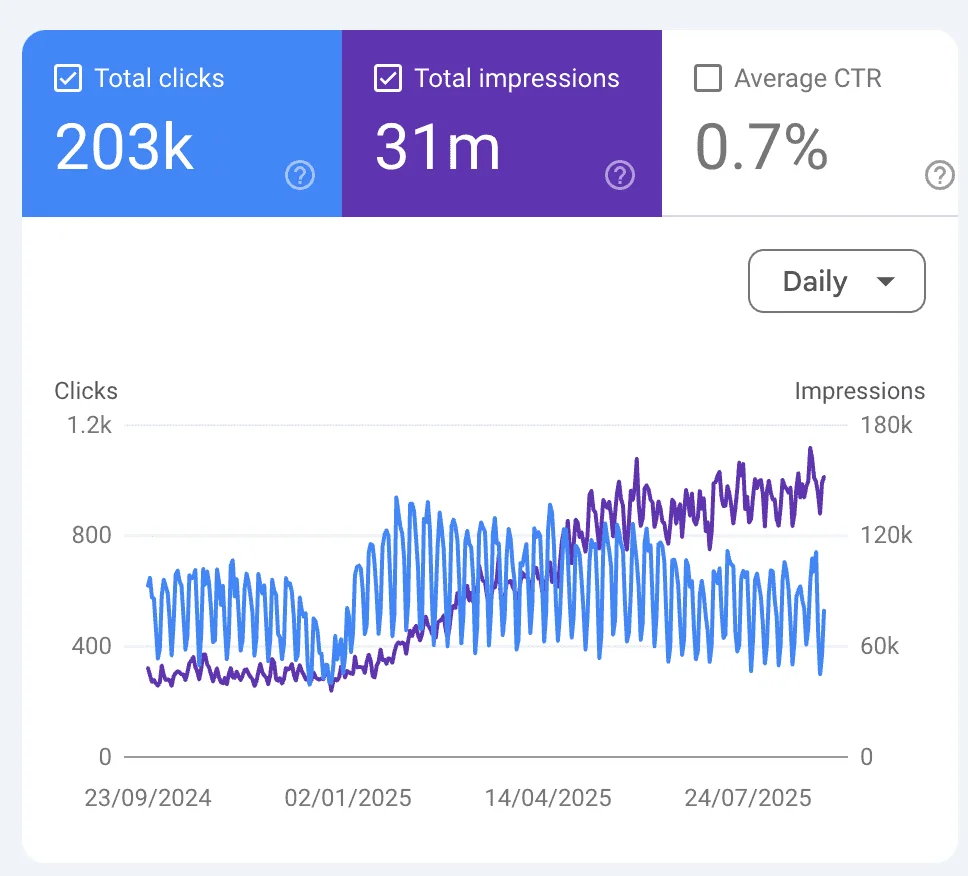
Built an enterprise-scale topical map covering 500+ entity clusters. Reached over 180,000 daily impressions and 31 million total search visibility with steady hockey-stick click momentum.
View Full Case Study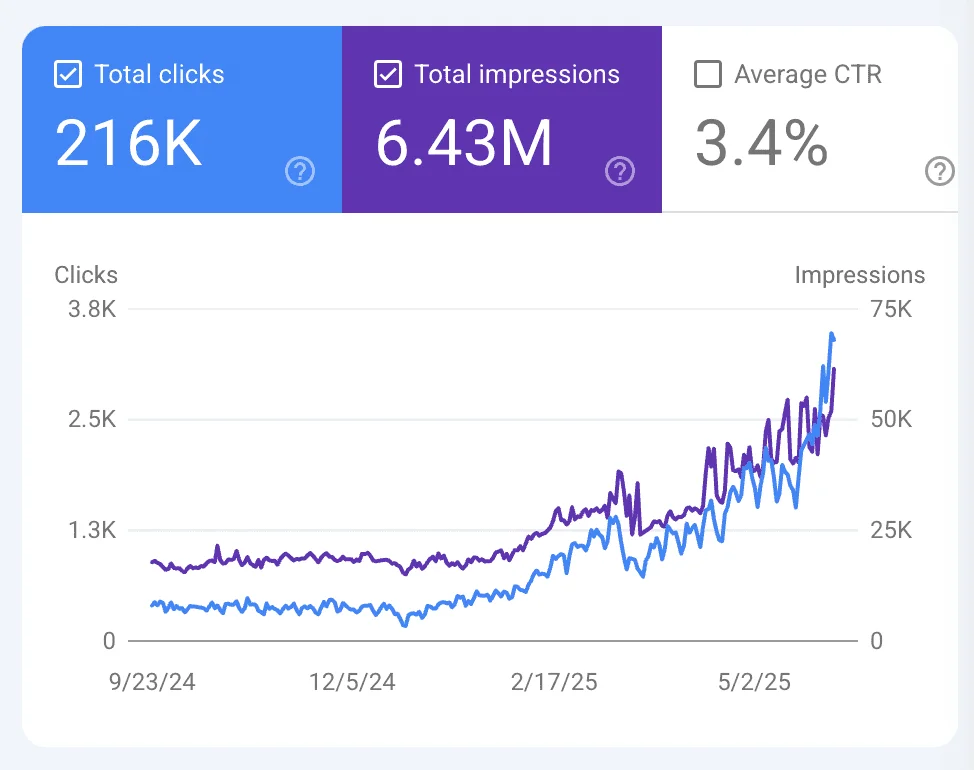
Restructured SaaS comparison pages, feature clusters, and high-intent commercial funnels. Scaled daily traffic to over 3.8K daily organic clicks with exponential ranking growth.
View Full Case Study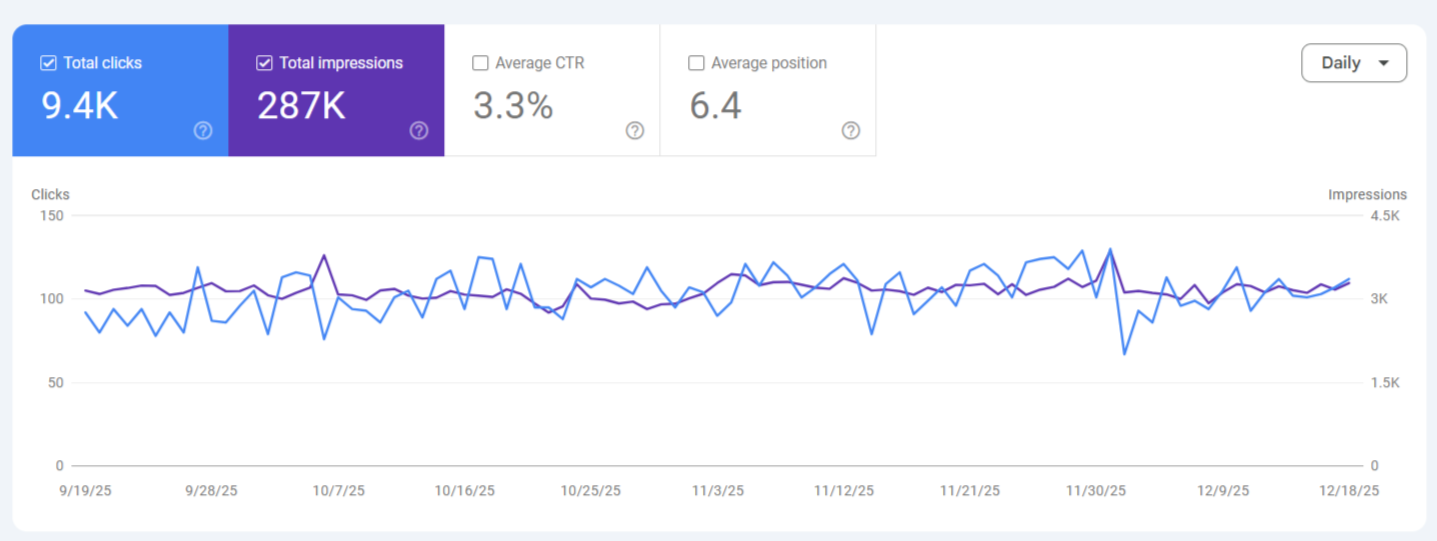
Overhauled product category taxonomies with nested JSON-LD Product schema and transactional intent modeling, driving average store-wide rankings to Page 1 (6.4 avg position).
View Full Case Study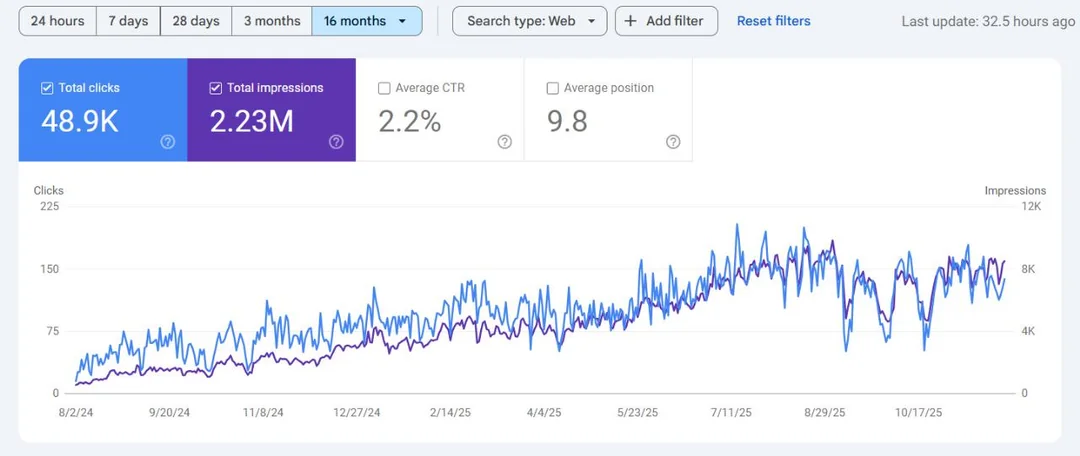
16 months of continuous compounding growth without drops during 3 major Google Core Algorithm Updates, proving the sustained durability of holistic semantic ecosystems.
View Full Case Study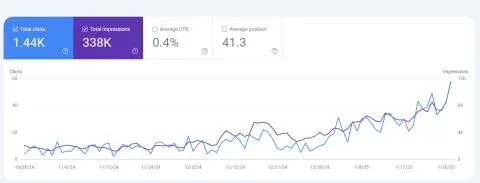
Built a semantic SEO strategy around buyer intent, optimized technical SEO, and created topic clusters that reduced dependence on paid ads while driving high-value demo inquiries.
View Full Case Study
Restructured website architecture, improved Core Web Vitals, and implemented structured data. Drove higher commercial search rankings and consistent inbound client inquiries.
View Full Case Study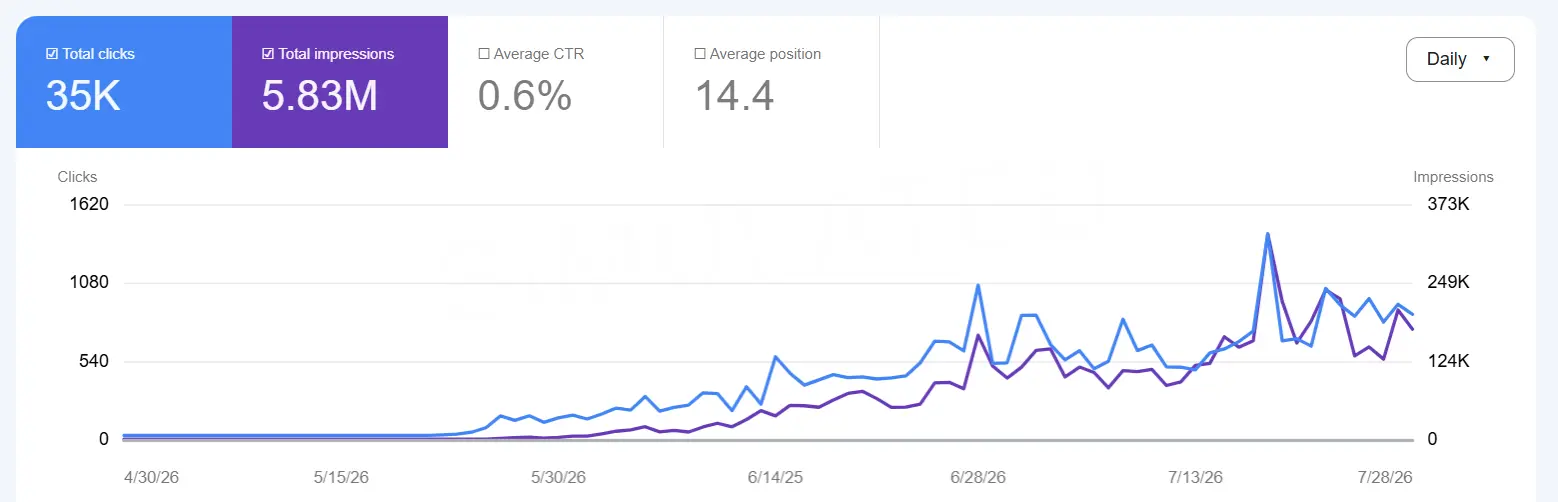
Strengthened topical authority with deep semantic content and category entity restructuring, driving consistent top-ranking dominance for mission-critical manufacturing terms.
View Full Case StudySee how founders, marketing directors, and organic growth executives established unshakeable topical authority and compounding organic revenue with JustSemanticSEO.
“Before working with Hanzala and JustSemanticSEO, our SaaS blog was trapped in traditional keyword stuffing that kept getting penalized by Google core updates. Their entity mapping and semantic content briefs completely transformed our search footprint. Within 5 months, we became the primary citation source in ChatGPT and Google AI Overviews for over 80 high-intent enterprise SaaS queries.”
Verified Clutch 5.0 Review
“JustSemanticSEO’s entity-first methodology is in a league of its own. They didn't just give us keyword ideas; they designed a master topical hierarchy with JSON-LD schema that linked our brand directly to Wikidata entities. Our compliance and financial advisory content now outranks established banks in both Google and Bing.”
“Legal SEO is notoriously cutthroat, and generic agencies always failed us with shallow blogs. Hanzala applied Koray Tuğberk GÜBÜR’s topical authority framework to our practice areas. Our entity depth and contextual internal links allowed us to dominate local commercial queries and sign corporate clients every single week.”
“After an aggressive Google core update knocked 40% of our organic traffic, JustSemanticSEO audited our entity signals and reorganized our categories into a structured knowledge base. Not only did we recover all lost rankings within 90 days, but our non-brand revenue hit an all-time record.”
Have questions about your domain's topical authority? Reach out to our semantic architects for a comprehensive initial evaluation.
Everything you need to know about Semantic SEO, topical maps, entity optimization, and partnering with JustSemanticSEO.
Semantic SEO is the practice of optimizing web content around entities, concepts, and relationships rather than isolated keywords. It aligns with Google’s Hummingbird, RankBrain, and MUM algorithms to ensure search engines understand the exact meaning, context, and intent of your website.
Traditional SEO focuses on repeating exact-match keywords, writing surface-level blog posts, and chasing backlink quantities. Semantic SEO focuses on building an interconnected knowledge graph across your website, satisfying all facets of user search intent, and achieving topical authority that makes rankings resilient to algorithm updates.
A topical map is an architectural blueprint outlining every entity, topic cluster, subtopic, and intent level required for a domain to become the definitive authority on a subject. Without a topical map, content is published randomly, causing internal competition and leaving authority gaps that competitors exploit.
We apply Koray Tuğberk GÜBÜR’s topical authority framework combined with proprietary NLP and knowledge graph modeling. We map your domain's core entities, create structured content briefs with clear information gain, and deploy advanced JSON-LD schema to bridge your website directly with Google's Knowledge Graph.
Hanzala Khan is the Founder & CEO of JustSemanticSEO. With over 5 years of specialized experience in entity-first search optimization, he has designed over 100+ topical maps and 5,000+ content briefs for SaaS, legal, healthcare, and enterprise clients globally.
Our clients typically experience compounding organic traffic growth, top-3 rankings across high-commercial intent terms, resistance to core algorithm updates, and prominent inclusion in Google AI Overviews and ChatGPT search citations.
Transform your website into an authoritative knowledge ecosystem that outranks competitors and wins the trust of search engines and generative AI.